 blog
Reliable Alarm Services for Travelers Who Can't Afford to Oversleep
Last Updated: October 25, 2026
Quick Summary
Reliable alarm services for travelers use real phone calls with conversational AI instead of silent notifications, forcing two-way engagement that prevents oversleeping in unfamiliar environments. Unlike standard phone alarms that are easy to ignore during travel stress and jet lag, these services include smart retry capability, customizable personas, and personalized briefings to ensure you actually wake up.
- Real phone calls create accountability by requiring two-way conversation instead of one-way dismissal
- Smart retry feature automatically calls back if you don't answer the first attempt
- Customizable personas and personalized weather/news briefings keep you engaged during wake-up
- Set alarm at least two hours before early flight departures to account for unexpected delays
- Verify phone number and confirm wake-up time the night before travel to prevent setup errors
Table of Contents
- Why Standard Alarms Fail When You're Traveling
- Reliable Alarm Services for Travelers: What Sets Them Apart
- Wake-Up Call Service for Travelers: How Conversational AI Beats Silent Notifications
- Alarm Apps for Heavy Sleepers: The Accountability Factor
- Backup Alarm for Early Flights: Why Redundancy Matters
- How to Wake Up Early for a Flight Without Panic
- Setting Up Your Reliable Alarm Service Before You Travel
- Frequently Asked Questions
Why Standard Alarms Fail When You're Traveling
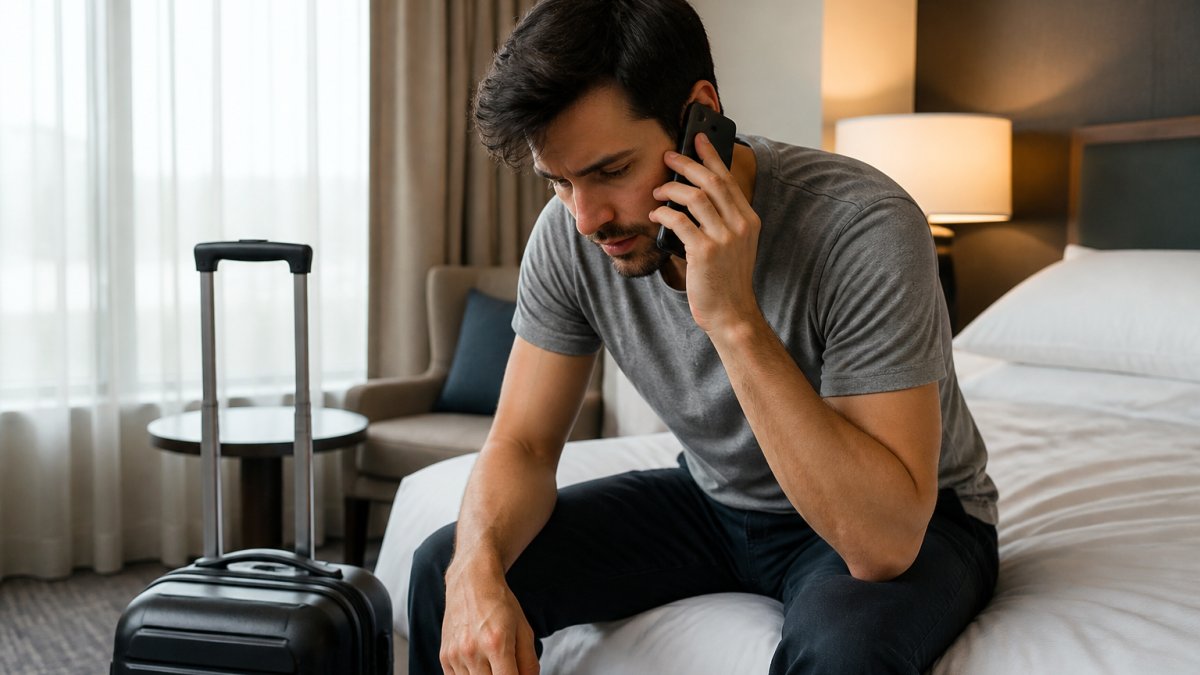
Your phone's alarm sits on the nightstand. You've set it for 5 a.m. You've even set a backup alarm at 4:55 a.m. Then you wake up at 7:30 a.m. to a text from your interviewer asking where you are.
Standard alarms fail travelers because they're too easy to ignore. A buzzer, a vibration, a ringtone, your brain dismisses them as background noise when you're disoriented from travel, jet lag, or unfamiliar surroundings. You hit snooze without thinking. You silence the alarm half-asleep.
The problem gets worse when you're in a new time zone. Your body doesn't recognize the local time as real. Your internal clock is still on a different schedule. A standard alarm feels like a suggestion, not an obligation.
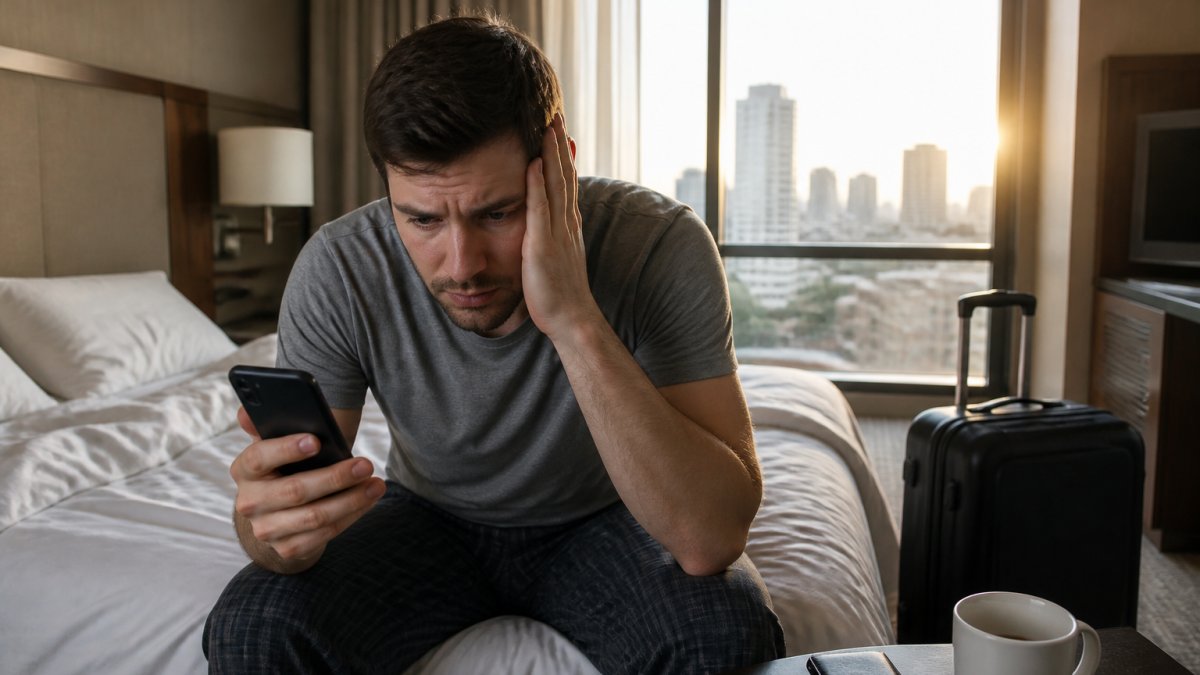
This is where reliable alarm services for travelers become essential. Unlike a silent notification on your phone, a real accountability system forces engagement. You can't silence a phone call the same way you silence an alarm.
Reliable Alarm Services for Travelers: What Sets Them Apart
What separates a reliable alarm service from a standard phone alarm is the accountability layer. A reliable alarm service for travelers doesn't just notify you, it communicates with you. It expects a response. It follows up if you don't engage.
The best reliable alarm services for travelers use real phone calls instead of notifications. A call forces a two-way interaction. You have to speak, confirm you're awake, or take action. Your brain can't dismiss a conversation the way it dismisses a buzzer.
Key features that define a reliable alarm service include:
- Real phone calls instead of notifications, eliminates the ability to silence and ignore
- Conversational AI that engages you, asks questions, provides information, creates accountability
- Smart retry capability, calls back automatically if you don't answer the first time
- Customizable personas, choose a gentle coach or a drill sergeant based on what motivates you
- Personalized briefings, weather and news delivered as part of your wake-up call
- No snooze button, removes the option to delay and drift back to sleep
RiseCall exemplifies this approach. Instead of relying on your phone's alarm, RiseCall sends a real AI-powered call that expects you to engage. You can choose your wake-up persona, receive your weather and news briefing during the call, and know that if you miss the first attempt, the system will call back. This transforms your morning from a battle with your phone to a real commitment device.
The difference matters most for high-stakes mornings. Job interviews, early flights, critical exams, these are the moments when oversleeping isn't just inconvenient, it's catastrophic. A reliable alarm service for travelers removes the risk by replacing silence with accountability.
Wake-Up Call Service for Travelers: How Conversational AI Beats Silent Notifications
A wake-up call service for travelers works because it changes the fundamental interaction between you and your alarm. Instead of a one-way alert, you get a two-way conversation.
When your phone buzzes with a notification, your brain processes it passively. You see it, you dismiss it, you go back to sleep. Your conscious mind never fully engages. A phone call is different.
Conversational AI amplifies this effect. Rather than a generic alarm tone, you hear a personalized voice that asks you questions. "Are you up? What's your first task today?
Many travelers find that a wake-up call service for travelers solves the jet lag problem directly.
The smart retry feature makes a wake-up call service even more reliable. If you don't answer the first call, the system calls back. This removes the risk of a single missed attempt derailing your morning.
RiseCall's approach here is straightforward: replace the silent notification with real accountability. You choose your persona, receive your briefing, and start your day with purpose instead of panic.
Alarm Apps for Heavy Sleepers: The Accountability Factor
Standard alarm apps for heavy sleepers fail because they don't account for the psychology of oversleeping. A heavy sleeper's brain has learned to dismiss alarms as background noise. Setting the volume louder doesn't solve the problem, it just makes the noise more annoying, not more effective.
What actually works for heavy sleepers is accountability. Alarm apps for heavy sleepers that introduce a human or AI element perform dramatically better than apps that just increase volume. The reason is simple: you can't ignore a conversation the way you can ignore a sound.
The accountability factor works in several ways:
- Forced engagement, you have to respond, not just silence
- Social pressure, knowing someone (or something) is on the other end expecting you to wake up
- Consequence awareness, if you don't answer, the call comes back
- Time commitment, you're locked in a conversation, not just dismissing an alert
Heavy sleepers often report that alarm apps for heavy sleepers designed around accountability actually work. They're not fighting their brain's tendency to dismiss sounds, they're working with it by introducing a layer that can't be dismissed as easily.
The best alarm apps for heavy sleepers don't rely on willpower. They rely on structure. They remove your ability to make a bad decision (hitting snooze) by replacing the snooze button with a conversation. You either engage with the wake-up call service or you actively avoid it. Most people choose engagement.
Backup Alarm for Early Flights: Why Redundancy Matters
Missing an early flight isn't just about oversleeping. It's about the cascade of failures that lead to oversleeping. Your primary alarm fails. Your backup alarm fails. You wake up to a missed call from the airline.
A backup alarm for early flights needs to work independently from your phone's built-in alarm system.
True redundancy for a backup alarm for early flights means using a completely different system. If your phone alarm is a notification, your backup should be a phone call. If your phone is on silent, a call still comes through.
Many travelers use multiple alarms on the same phone and wonder why they still oversleep. The answer is that they've created the illusion of redundancy without actual backup.
This is where a wake-up call service becomes essential. It's not another alarm on your phone, it's an external system that calls you from outside your phone.
For early flights specifically, a backup alarm for early flights should be set for 15-20 minutes before your primary alarm. This gives you a margin if the first system fails.
How to Wake Up Early for a Flight Without Panic
Waking up early for a flight without panic starts the night before. You need a system that removes decision-making from the morning equation.
The first step is setting your alarm with redundancy built in. Don't rely on a single alarm on your phone. Set a backup system that operates independently.
The second step is preparing your environment. Charge your phone. Make sure it's on a surface where you'll hear it or feel it.
The third step is committing to a wake-up time that gives you buffer. If your flight is at 6 a.m., don't set your alarm for 4:45 a.m.
The fourth step is removing the snooze option. Snooze is the enemy of early flights. Every time you hit snooze, you're gambling that you'll actually wake up on the next cycle.
The fifth step is having a morning routine that starts immediately. Learn how to wake up early for a flight without panic to get practical guidance tailored to your travel schedule.
For flights specifically, set your alarm at least two hours before departure. This accounts for shower time, getting dressed, eating, and unexpected delays. Oversleeping by 30 minutes on a flight day is catastrophic.
FAA guidance on flight preparation emphasizes arriving at the airport with sufficient time before departure. This means your wake-up system needs to be bulletproof.
Setting Up Your Reliable Alarm Service Before You Travel
Setting up a reliable alarm service before you travel takes 10 minutes and prevents hours of stress.
Start by choosing your service. A reliable alarm service for travelers should offer phone call-based wake-up calls, not just app notifications.
Next, create your account and verify your phone number. This is critical. If your phone number is wrong, the call won't reach you. Double-check the number. Test it if the service allows.
Set up your wake-up preferences. Choose your persona. Decide whether you want weather and news briefings. Set the time you want to be called.
Add a backup alarm on your phone as a secondary safety net. This isn't your primary system, it's your redundancy layer. Set it for 15 minutes after your reliable alarm service call is scheduled.
Review your travel itinerary and confirm your wake-up time aligns with your actual flight time. Time zone changes complicate this.
RiseCall's setup process is designed to be straightforward. Schedule Call to see pricing and plan options, or Get AI Wake Up Calls: 2026 Guide to Real Accountability for more details on how the service works.
The night before your travel, confirm everything one more time. Check your account. Verify your phone number. Confirm your wake-up time. This five-minute verification eliminates the most common setup mistakes.
Oversleeping for an important flight or interview isn't a character flaw, it's a system failure. RiseCall delivers real phone calls with conversational AI, customizable personas, and smart retry capability so you actually wake up. Never oversleep an important morning again, set up your wake-up call service tonight.
| Feature | Standard Phone Alarm | Reliable Alarm Service |
|---|---|---|
| Notification Type | Silent buzzer or tone | Real phone call |
| Engagement Required | One-way alert | Two-way conversation |
| Retry Capability | Manual (you set multiple alarms) | Automatic (system calls back) |
| Travel Reliability | Fails in unfamiliar environments | Designed for travel stress |
| Snooze Option | Yes (defeats the purpose) | No (removes temptation) |
| Personalization | Generic alarm tone | Customizable persona and briefing |
Frequently Asked Questions
What makes a wake-up call service for travelers different from my phone's built-in alarm?
A wake-up call service for travelers uses conversational AI or human interaction instead of a silent vibration or tone. Rather than hoping you hear a notification, the service calls your phone directly, creating a two-way conversation that requires you to engage and confirm you're awake. Many services also include smart retry features that call back if you don't answer the first time, and they work across time zones without requiring you to manually adjust settings when traveling internationally.
Are alarm apps for heavy sleepers actually effective, or is this just marketing?
Alarm apps for heavy sleepers work best when they combine multiple wake-up methods: loud sounds, vibrations, and critically, accountability. The most effective apps require you to solve a puzzle, answer a question, or in some cases, receive a live call you must acknowledge. The accountability element, knowing someone or something will follow up if you don't respond, is what stops the snooze-button habit. Standard alarm apps fail because they're too easy to dismiss without fully waking.
How do I set up a backup alarm for early flights to make sure I don't miss my departure?
Set up a backup alarm for early flights by using at least two independent systems: your phone alarm at your target wake time, plus a wake-up call service set for 15-30 minutes earlier as insurance. Request a hotel wake-up call as a third layer if available. Set reminders on your travel app for the flight departure time itself. The goal is layered redundancy, if one system fails, another catches you. Test all systems the night before to confirm they work in your hotel room.
Will a reliable alarm service for travelers work if I'm crossing multiple time zones?
Yes, reliable alarm services for travelers are designed to work across time zones. When you set your wake-up time, specify your current time zone or the destination time zone depending on when you want to wake. However, confirm the service supports international calling and that your phone plan includes incoming calls while traveling, especially if you're outside your home country.