 blog
How to Choose the Best AI Wake-Up Services
Last Updated: October 26, 2026
Quick Summary
The best AI wake-up services replace standard alarms with real phone calls that require active engagement, using conversational AI to create accountability where alarms fail. Services like RiseCall combine smart retry capability, customizable call personas, and personalized content to ensure you wake up for important mornings.
- Smart retry capability makes 2-3 attempts within a 15-30 minute window if you miss the first call
- Customizable call personas let you choose voice tone from gentle coach to assertive drill-sergeant style
- Generative conversational AI responds to your actual words, unlike prerecorded playback or scripted IVR systems
- Personalized content like weather briefings and calendar reminders keeps calls engaging rather than robotic
- Reliable services require explicit consent at sign-up, offer one-step opt-out, and publish data retention policies
Table of Contents
- Why Standard Alarms Fail (And What Makes AI Wake-Up Services Different)
- How an AI Wake-Up Call Service Works
- Wake-Up Call Apps for Heavy Sleepers: Key Features That Matter
- Personalized Morning Phone Calls: Customization and Voice Options
- Wake-Up Call Services With Retry: Why Multiple Attempts Matter
- Reliability, Privacy, and Availability Across Time Zones
- Finding Your Best AI Wake-Up Service
- Frequently Asked Questions
Why Standard Alarms Fail (And What Makes AI Wake-Up Services Different)
Your phone alarm goes off. You hit snooze. Five minutes later, it goes off again. You hit snooze again.
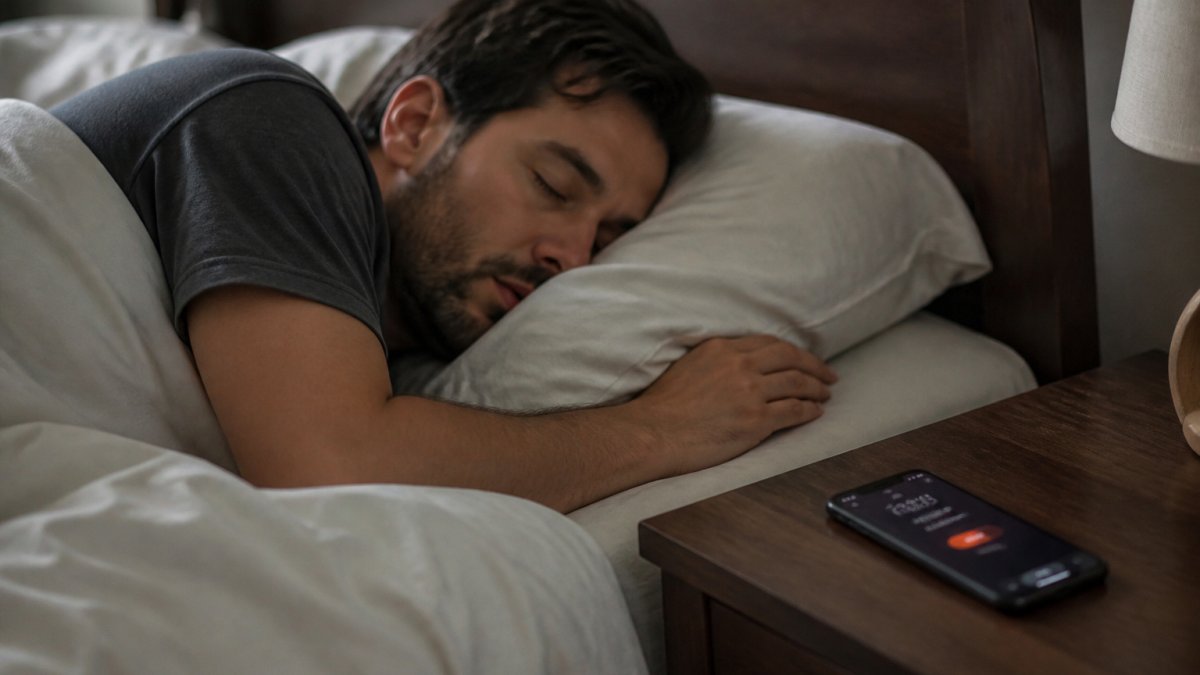
This isn't laziness. It's biology. Your brain is wired to dismiss repetitive sounds, especially ones you control, and the snooze button trains it to ignore the alarm entirely.
An AI wake-up call service replaces the alarm with something your brain can't dismiss: a real conversation.
The difference comes down to this: alarms are easy to ignore. Phone calls are not.
How an AI Wake-Up Call Service Works
An AI wake-up call service operates on a simple principle: scheduled phone calls replace your alarm at a time you set.
You set your wake-up time and preferences through an app or web portal.
The key feature is two-way interaction. By the time the call ends, you're not just awake, you're alert. Learn how AI wake-up calls function as a complementary guide to understanding real accountability.
FTC guidance on automated calling and consumer consent
Wake-Up Call Apps for Heavy Sleepers: Key Features That Matter
Heavy sleepers need more than a loud noise. The best AI wake-up services for heavy sleepers share several critical features.
Smart Retry capability is non-negotiable.
Customizable call personas matter because different people respond to different voices.
Call reliability and delivery guarantees separate services that work from ones that don't.
Personalized content keeps the call engaging rather than robotic.
Flexible scheduling accommodates varying sleep schedules.
| Feature | Why It Matters for Heavy Sleepers | What to Look For |
|---|---|---|
| Smart Retry | Catches you if you miss the first call | 2-3 retry attempts within 15-30 min |
| Call Personas | Different voices work for different people | Customizable tone (gentle to assertive) |
| Reliability | A failed call defeats the entire purpose | Published uptime metrics, redundant networks |
| Personalized Content | Keeps engagement higher than generic calls | Weather, news, or custom messages |
| Flexible Scheduling | Adapts to your actual sleep patterns | One-time, recurring, or pause options |
Sleep Foundation research on alarm effectiveness and sleep cycles
Personalized Morning Phone Calls: Customization and Voice Options
The voice on the other end of your wake-up call matters more than you might think. A voice that matches your preferences creates a wake-up experience that feels intentional rather than intrusive.
What actually makes a wake-up call "AI"
Not every automated call is AI. There are three common architectures, and they behave very differently at 6 a.m.:
- Prerecorded playback. The service dials your number and plays a fixed audio file. It may sound human, but it cannot respond to what you say. If you mumble "I'm up" and hang up, the call has no idea whether you actually woke up.
- Scripted interactive voice response (IVR). The call plays prompts and waits for keypad presses or simple yes/no speech. This is the same technology behind phone menus. It can confirm you answered, but it cannot hold a conversation or adapt its tone.
- Generative conversational AI. The service generates speech dynamically and responds to your actual words. It can ask follow-up questions ("What's the first thing on your calendar today?"), detect that you're still groggy, and escalate or change approach mid-call. This is the category that genuinely differs from an alarm.
When you compare services, ask directly which architecture they use. A provider that says "AI voice" but cannot explain whether speech is generated or pre-recorded is usually playing back audio. The practical test: say something unexpected during a trial call ("What's the weather in Chicago?") and see whether the response is relevant or whether the call simply continues its script.
Voice selection and persona design
Most services offer a menu of voices: male and female, different accents, and varying energy levels. Some let you record your own voice or a friend's. The psychology is straightforward: you engage more with a voice you chose than one imposed on you.
Persona design goes beyond accent. The useful distinctions are:
- Tone: gentle coach versus direct and assertive. Heavy sleepers often need the latter, but the wrong assertive tone can make a call feel hostile and lead people to silence unknown numbers.
- Pacing: a slow, calm delivery versus a brisk one. Slow speech can lull a groggy brain back toward sleep; brisk speech tends to prompt a response.
- Interaction style: whether the AI asks you to repeat a phrase, answer a question, or complete a short task before it ends the call. A call that requires a specific spoken response is harder to sleep through than one that only needs a grunt.
Message content and morning briefings
Customization extends to what the call says. Common configurations include:
- A weather briefing for your location.
- News headlines or a short sports or markets summary.
- A reminder of the day's first commitment ("You have a 9:00 interview; leave by 8:15").
A useful pattern is to combine one piece of real information with one action prompt: "It's 42 degrees and raining; your first meeting is at 9; say 'I'm awake' to end this call." Pure motivation fades; concrete information holds attention.
Time-zone and schedule awareness
If you travel or work across multiple zones, the service needs to adjust your call time to your current location, not your home time zone. Some sync to your phone's location with permission; others require manual updates each trip. Ask which model a provider uses before you rely on it for a flight or an out-of-town interview.
What happens to your voice data
Voice-based services raise a privacy question alarm apps do not: what is recorded, and for how long? A conversational AI may process your spoken responses to determine whether you are awake, and that audio or a transcript may be stored for quality and model improvement.
Before subscribing, look for a plain-language answer to four questions:
- Is the call audio recorded, or only transcribed, or neither?
- How long are recordings and transcripts retained?
- Can you delete them from your account, and does deletion remove them from backups?
- Is your voice used to train models, and can you opt out?
A provider that cannot answer these questions is asking you to trust a black box with audio from your bedroom.
California Consumer Privacy Act guidance for consumers
A practical customization checklist
When you evaluate voice and message options, test these in a trial:
- Does the AI respond to an unexpected question, or does it ignore you?
- Can you change the voice and tone without changing plans?
- Does the call require a spoken response before it ends?
Customization is not decoration. The right voice, the right prompt, and the right data controls are what turn a phone call into a wake-up system you actually trust.
Wake-Up Call Services With Retry: Why Multiple Attempts Matter
A single phone call can fail for reasons outside your control: a dead zone, a phone on silent, or sleep so deep you genuinely don't hear it.
Smart retry separates reliable wake-up call services from ones that occasionally let you down.
Retry logic matters. Some services increase volume or change tone with each attempt; others vary the message.
This is especially critical for high-stakes mornings. Missing an interview because your phone was on silent isn't inconvenient, it's a deal-breaker.
Reliability, Privacy, and Availability Across Time Zones
When you're relying on a service to wake you up for something important, reliability isn't optional. A service that works 95% of the time still fails you one out of every twenty mornings, which is unacceptable for critical events.
How to test reliability instead of trusting a claim
Most providers advertise reliability but few publish numbers. Run a transparent test yourself over one to two weeks:
- On-time delivery. Log the scheduled time and the actual ring time for each call. A few seconds of delay is normal; minutes of delay suggest scheduling or carrier issues.
- Retry behavior. Let the first call go unanswered and record how long the service waits before the second attempt, how many attempts it makes, and whether it leaves a voicemail.
- Voicemail and silent-mode behavior. If your phone is on silent or Do Not Disturb, does the call still ring? Does the service fall back to a text message or a second number?
A common pattern is two to three retries within a 15-30 minute window, with the message or tone escalating each time. The interval matters: too short and the calls blur together; too long and you fall back into deep sleep. Fifteen minutes is a reasonable default, though shift workers and people with sleep inertia may need a tighter window.
Accessibility and different waking needs
A phone call is an audio cue, which creates obvious problems for people with hearing loss. Practical accommodations to look for:
- Visual backup. Does the service send a text or push notification alongside the call?
- Vibration and repeat. Can it call a mobile number that vibrates, and can it repeat until acknowledged?
- Text-to-speech clarity. Can you slow the speech rate or choose a clearer voice?
Beyond hearing, different waking needs change what "reliable" means. Shift workers need rotating schedules that respect daytime sleep; people on medication schedules may need a call that prompts a specific action; people with sleep inertia benefit from a call that requires interaction rather than a single tone. Few providers document how they handle these needs, so ask before you subscribe.
Privacy and consent: the rules that apply to the calls themselves
Automated wake-up calls sit at the intersection of telemarketing and personal data rules. Under the Telephone Consumer Protection Act (TCPA), automated calls to mobile phones generally require prior express consent, and the FTC's Telemarketing Sales Rule imposes related requirements. A legitimate service should collect clear consent at sign-up, honor opt-outs promptly, and let you control how many calls you receive.
Practical controls to confirm before subscribing:
- Consent capture. Is consent explicit at sign-up, and can you see what you agreed to?
- Opt-out. Can you stop all calls with one action, and does it take effect immediately?
- Call frequency limits. Can you cap the number of calls per day or per week?
FTC guidance on automated calling and consumer consent
Data retention and deletion
You are giving a service your phone number, your schedule, and possibly audio of your voice. Ask what is stored, where, and for how long. Look for a stated retention period, a self-service deletion option, and a commitment not to sell personal data. Encryption in transit is table stakes; encryption at rest is a meaningful differentiator.
NIST cybersecurity guidelines for personal data protection
Time zones, travel, and phone compatibility
Time-zone handling is where many services quietly fail. Fly from the East Coast to the West Coast and a call scheduled for 7 a.m. home time rings at 4 a.m. local unless the service adjusts. Test this before a trip.
Phone compatibility matters too. Confirm the service supports your number type (mobile, landline, VoIP), carrier, and region.
A reliability scorecard you can fill in
Use this to compare providers on equal terms during a trial:
| What to measure | How to measure it | What good looks like |
|---|---|---|
| On-time delivery | Log scheduled vs. actual ring time for 10 calls | Within a minute, consistently |
| Retry behavior | Let calls go unanswered and record attempts | 2-3 attempts within 15-30 minutes |
| Voicemail and silent mode | Test with phone on silent and Do Not Disturb | Call still rings or a text backup arrives |
| Consent and opt-out | Review sign-up flow and try stopping calls | Explicit consent, one-step opt-out |
| Data controls | Look for retention period and deletion option | Stated period, self-service deletion |
| Time-zone handling | Change location and check call time | Automatic adjustment with permission |
| Accessibility | Test text backup and speech clarity | Visual backup and adjustable speech |
Reliability is not a marketing claim you can verify from a landing page. It is a set of behaviors you can measure in a week of trial calls, and the providers worth trusting will make those measurements easy.
Finding Your Best AI Wake-Up Service
Choosing the right AI wake-up call service depends on how you wake up best.
Test with a free trial if one is available.
Consider the specific use case. For a critical interview or exam, prioritize reliability and retry capability.
At RiseCall, we've built our service around the specific needs of job seekers, students, and early-shift workers who can't afford to oversleep. Never oversleep an important morning again. The smart retry feature ensures you don't miss a call due to a dead zone or a phone on silent.
The real question isn't whether you need a better alarm, it's whether you can afford not to have one.
The difference between oversleeping and showing up on time comes down to the system you trust to wake you up. With real accountability calls that require you to engage, retry logic that catches missed attempts, and personalized content that keeps you focused, RiseCall ensures you start important mornings with purpose instead of panic.
Frequently Asked Questions
How do AI wake-up call services work compared to regular alarms?
AI wake-up call services replace silent or easy-to-ignore alarms with a real phone call at your scheduled time. Instead of a beep, you receive a conversational call from an AI voice agent. The service typically includes smart retry features that call back if you don't answer the first time, ensuring you actually wake up. Many services offer customizable voice personas and can include personalized content like weather or news briefings in the call.
Can an AI wake-up call service work if my sleep schedule is irregular?
Yes, most AI wake-up call services accommodate irregular schedules. You can set custom wake-up times for specific days or create recurring schedules that vary by day of the week. This makes them suitable for shift workers, students with varying class times, and anyone whose sleep schedule changes frequently. Simply adjust your scheduled call time through the app or settings whenever your routine changes.
What should I look for in the best AI wake-up service for my needs?
Prioritize call reliability and retry capability, services that attempt multiple calls if you miss the first one are more effective for heavy sleepers. Check for voice customization options so the call feels personal rather than robotic. Verify the service supports your time zone and will reach you reliably. Review pricing and free trial options to test the service before committing. Finally, confirm the service has clear privacy policies and data security practices, especially since you're providing your phone number.
Do AI wake-up call services work internationally or across different time zones?
Most AI wake-up call services support multiple time zones and can reach you internationally, but compatibility depends on the specific service. Before signing up, confirm the service can call your phone number in your location and that it correctly handles your time zone. Some services may have limitations with certain countries or phone carriers, so check availability in your region. If you travel frequently, look for services explicitly designed to support international users and time zone changes.