 how-to
How to Stop Oversleeping for Interviews: A Practical Plan
Table of Contents
- Why Oversleeping Happens Before Interviews (and Why It's Fixable)
- How to Sleep the Night Before an Interview
- Interview Anxiety and Trouble Sleeping: What Actually Helps
- Build a Backup Alarm System You Cannot Ignore
- The Interview-Day Prevention Plan: Hour by Hour
- Wake-Up Call Service for Important Events: When a Standard Alarm Is Not Enough
- What to Do If You Miss a Job Interview
- One-Off Oversleeping vs. a Persistent Sleep Problem
- Frequently Asked Questions
Last Updated: October 18, 2026
Why Oversleeping Happens Before Interviews (and Why It's Fixable)
If you want to know how to stop oversleeping for interviews, start with the real cause: the night before a big interview is one of the worst possible times to rely on a normal alarm. We hear from job seekers every week who set three alarms, slept through all of them, and woke up in a panic. The problem is rarely laziness.
The Night-Before Anxiety Loop
Interview nerves create a loop that makes oversleeping more likely, not less. You lie awake worrying about waking up. The later it gets, the more you worry. By morning you are sleep deprived, which makes you sleep deeper and ignore sound.
Here is what the loop looks like in practice:
- You set an alarm earlier than usual "just to be safe"
- You check it three times before bed
- You lie awake past your normal bedtime
The fix is not trying harder. It is building a system that works even when you are tired and anxious. That is fixable, and the rest of this guide shows you how.
How to Sleep the Night Before an Interview
Sleeping well the night before an interview comes down to preparation, not willpower. Set your bedtime, cut the screen time, and prepare everything you need so your morning has fewer decisions.
Most people try to force sleep by going to bed early. That usually backfires. A better approach is to keep your normal bedtime and focus on winding down.
Try this:
- Set a hard stop on screens 60 minutes before bed. Blue light and doom-scrolling both keep you alert.
- Prep your morning the night before. Lay out clothes, print the address, pack your bag. Fewer morning decisions mean less fog.
- Write down your worries. A quick brain dump on paper gets the loop out of your head.
If you genuinely cannot fall asleep, get up and read something dull in dim light for 15 minutes. Lying there frustrated trains your brain to associate bed with stress.
Interview Anxiety and Trouble Sleeping: What Actually Helps
Interview anxiety and trouble sleeping are linked, and the fix is to lower the stakes in your head before you get into bed.
A common mistake is treating the night before like a study cram session. That spikes your stress right when you need to calm down.
What works better:
- Practice out loud earlier in the day, not at 10 p.m.
- Prepare a one-page cheat sheet of your key points so your brain can let go.
- Use a simple breathing pattern in bed: in for four, hold for four, out for six.
The goal is not perfect sleep. It is a calm enough night that your alarm system can do its job.
Build a Backup Alarm System You Cannot Ignore
A backup alarm system is a set of two or more independent wake-up methods that do not rely on the same device or power source.
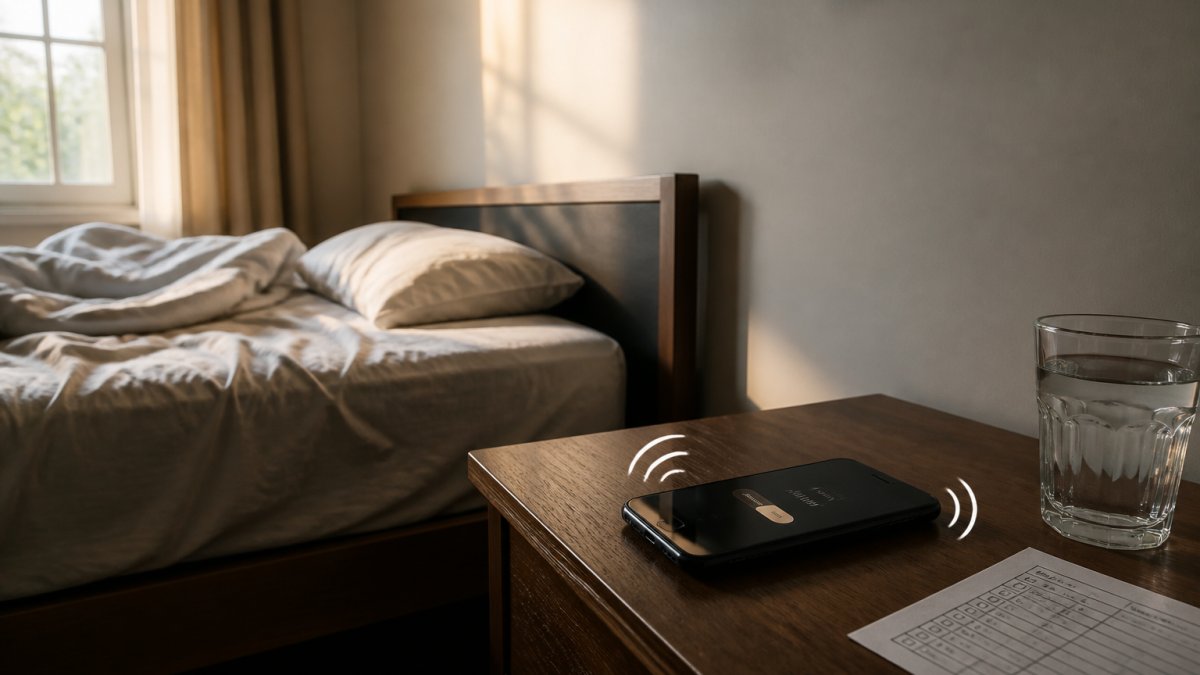
Alarm Placement and the Snooze Button Trap
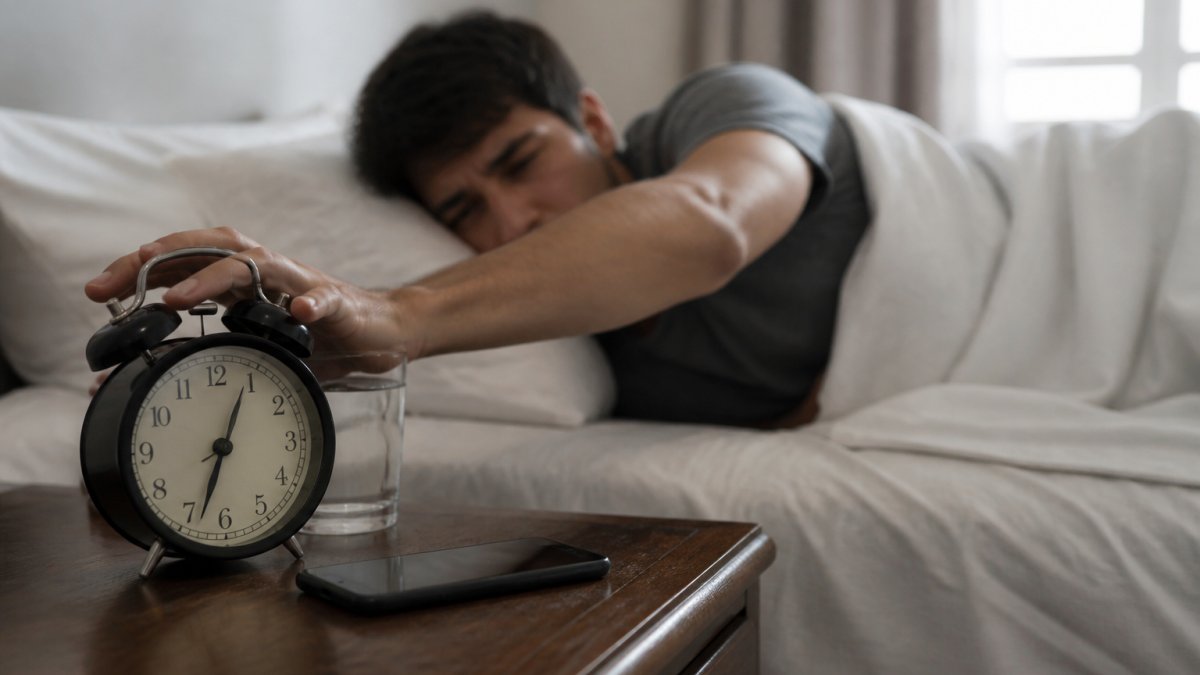
The snooze button is the enemy. Every time you hit it, you train your brain to treat the alarm as background noise. Put your phone or alarm clock across the room so you have to stand up to silence it.
- Place the primary alarm far from the bed
- Put a second alarm in another room
- Never keep water or your phone within arm's reach if it makes snoozing easy
Contingency Planning for Alarm or Tech Failure
Phones die. Power goes out. Apps crash. A real backup plan covers all three:
- A battery-powered alarm clock as a physical backup
- A second device with its own alarm set
- A wake-up call from another person or service as the final layer
The Interview-Day Prevention Plan: Hour by Hour
The interview-day plan is a fixed schedule you follow from the night before through the morning. It removes decisions and makes oversleeping far less likely.
Here is a simple version you can copy and adjust to your start time:
| Time | Action | Why It Matters |
|---|---|---|
| 8:00 p.m. | Prep clothes, bag, documents, and a printed copy of the address and interviewer name | Fewer morning decisions and no scrambling for details |
| 8:30 p.m. | Confirm transport: check the route, ride-share availability, and parking | Removes a morning unknown that causes panic |
| 9:00 p.m. | Screens off, light reading | Helps you fall asleep |
| 9:30 p.m. | Set primary alarm, backup alarm, and confirm any wake-up call | Redundancy before bed, not after |
| 10:00 p.m. | Lights out | Protects sleep duration |
| Alarm time - 15 min | Backup alarm set in another room | Redundancy if the primary fails |
| Wake-up time | Stand up immediately, drink water | Beats the snooze trap |
| +10 min | Bright light and movement | Boosts alertness |
| +30 min | Light breakfast, no heavy caffeine | Steady energy without a crash |
| Departure - 45 min | Leave with a buffer | Absorbs transit delays |
| Arrival - 15 min | Check in, silence phone, review one-page cheat sheet | Arrive calm, not rushed |
A few ground rules:
- Build a buffer, not a sprint. Aim to arrive 15 minutes early. A 45-minute transit buffer absorbs most delays without forcing you to leave absurdly early.
- Verify the alarm before bed. Watch it ring once, then reset it. This catches silent mode, low volume, and dead batteries before they matter.
- Stage a physical backup. A battery-powered alarm clock in another room costs little and works when the power does not.
If you have an early interview, test the full sequence once on a normal workday. A dry run exposes the weak link, a phone that dies overnight, a backup alarm you cannot hear, or a transit route that runs less often before rush hour, while the stakes are low.
Wake-Up Call Service for Important Events: When a Standard Alarm Is Not Enough
A wake-up call service for important events is a phone-based system that calls you at a set time and stays on the line until you are actually awake. It replaces the passive alarm with an active conversation.
Instead of a tone you can sleep through, you get a real conversational AI phone call. You can pick a persona, like a gentle coach or a drill sergeant, and get a short weather and news briefing to start the day with focus.
What makes it different from a standard alarm:
- Real accountability: a call you have to answer and engage with
- Smart Retry: up to three attempts if you miss the first call
- No snooze button: there is nothing to swipe away
If you have tried several alarm apps and still sleep through them, the issue is not volume. It is that a sound alone does not require a response. A call does.
What to Do If You Miss a Job Interview
If you miss a job interview, act fast and be honest. Call or email the interviewer within the first hour, apologize briefly, and ask to reschedule. Most hiring managers respond better to a quick, calm recovery than to silence. The goal is to show that you handle a mistake professionally, not to explain every detail of why you overslept.
Do not over-explain. Do not blame traffic if you overslept. A short, direct message protects your credibility.
Choose the Right Channel and Timing
- Call first if you have a direct number. A live call within 30 to 60 minutes reads as accountable. If you reach voicemail, leave a brief message and follow up by email the same hour.
- Email if you only have a general inbox. Send it within the first hour, with a clear subject line such as "Apology and reschedule request, [Your Name], [Role] interview."
- Do not wait until the end of the day. A same-morning message keeps the door open; an evening message reads as an afterthought.
A Recovery Script You Can Adapt
Here is a script you can adapt for a phone call or email:
"Hi [Name], this is [Your Name]. I want to apologize for missing our [time] interview today. I had a wake-up failure on my end and I take responsibility for it. I am still very interested in the role and would welcome the chance to reschedule at your convenience. I can be flexible to your calendar. Thank you for understanding."
Keep it to four sentences. Name the mistake once, take responsibility, and move to the reschedule request. Avoid excuses, avoid a long story, and avoid promising it will never happen again, show it through your next actions instead.
Follow-Up and Damage Control
- Follow up once if you do not hear back within one business day. Keep it to two sentences: restate your interest and offer two specific time windows.
- Offer flexibility without sounding desperate. Give two or three concrete windows rather than "anytime."
- If the role is reposted or the process moves on, ask for consideration on future openings. A graceful recovery can keep you in the recruiter's pipeline.
What Not to Do
- Do not go silent and hope they reschedule for you.
- Do not send a long apology that shifts blame to your alarm, your phone, or traffic.
- Do not ask for a same-day do-over unless the interviewer offers it.
One-Off Oversleeping vs. a Persistent Sleep Problem
A single missed alarm is a system problem. Repeated oversleeping is a pattern worth taking seriously. The difference matters because the fix is different.
Ask yourself:
- Did this happen once, after a stressful night?
- Or does it happen most weeks, even on normal days?
If it is occasional, tighten your backup system and move on. If it is frequent, look at your sleep habits, schedule, and stress. A sleep journal can help you spot the pattern.
Frequently Asked Questions
How many alarms should I set so I don't oversleep for an interview?
Set two or three alarms on separate devices, spaced five to ten minutes apart, plus one final alarm placed across the room. The goal is redundancy, not volume: a phone alarm, a bedside clock, and a backup call from a friend or a wake-up service cover the most common failure points. Avoid stacking six alarms on the same phone, since one dead battery or silenced device takes them all out at once. Test every alarm the night before so you know each one actually fires.
Can I perform well in an interview after only a few hours of sleep?
You can get through it, but expect slower recall and weaker focus on multi-part questions. Keep answers shorter and more structured than usual, write down key points on a notepad, and ask for a moment to think before responding. Skip the extra coffee if you are already jittery, drink water, and stand up or stretch before the call. If the interview is in person, arrive early and review your notes in the car or lobby rather than trying to memorize anything new.
What should I do if I oversleep and miss a job interview?
Contact the interviewer as soon as you realize, ideally within the first hour. Be brief and honest: say you missed the scheduled time, apologize once, and ask whether the conversation can be rescheduled or continued later that day. Do not invent a family emergency or a car breakdown. Offer flexibility on timing and confirm the new slot in writing. A calm, accountable message often lands better than a string of excuses, and many interviewers will give you a second slot.
Will a wake-up call service work if my sleep schedule is irregular or I travel across time zones?
A wake-up call service sets the call to the time you specify in your local zone, so it works for night shifts and travel as long as you update the time after landing. The advantage over a phone alarm is the two-way conversation and the smart retry feature, which calls back if you miss the first attempt. Check that the service supports international numbers before you rely on it abroad, and set a second alarm on your phone as a backstop.
Missing a high-stakes interview because of a silent phone is a preventable problem. RiseCall replaces the alarm you can ignore with a real conversation you have to answer, backed by Smart Retry, customizable personas, and a personalized morning briefing. If you are tired of gambling on a snooze button, schedule a call with RiseCall and start your next interview morning with purpose instead of panic.